


Tropaia, Gortynia: A Journey to the Heart of Mainalon for Children's Mental Health

In the heart of mountainous Gortynia, built amphitheatrically on the slopes of Mount Mainalon, Tropaia is a place of deep historical memory and a living, breathing community. As part of its partnership with the Mobile Medical Units (MMUs) of "Regeneration & Progress," the Child & Adolescent Mental Health Initiative (CAMHI) visited the area on May 15, 2026, for a day of meetings with educators from all school levels and local healthcare staff.
Tropaia sits at an altitude of approximately 800 metres and has a permanent population of 524 — a small but active community with strong bonds and an authentic Arcadian character. The imposing stone-built Tropaia Primary School holds a distinctive place in the area's identity, one of the most significant school buildings in the Peloponnese, erected in the early 20th century with funding from the legacy of the national benefactor Andreas Syngros. The building remains a symbol of the area's enduring connection to education.
Field Meetings
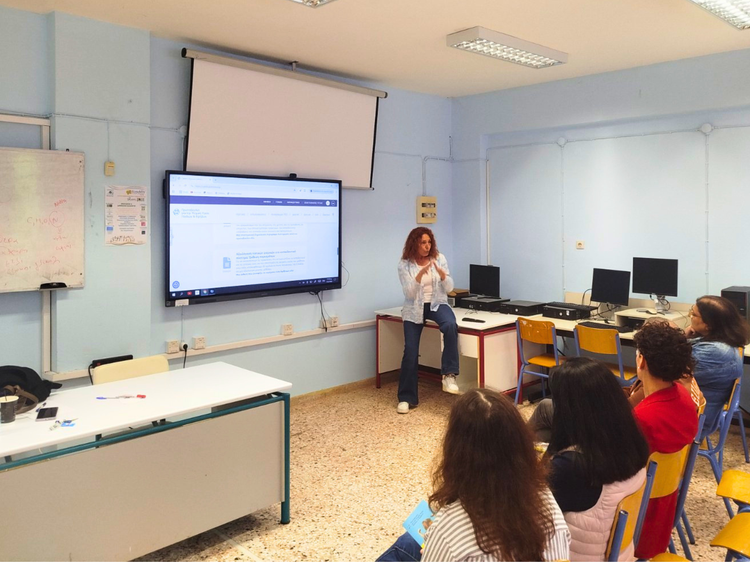
During the visit, CAMHI's representative, Efi Kapsimalli, a child psychiatrist, held meetings at three different settings.
At the Tropaia Primary School and Kindergarten, a meeting took place with the three primary school teachers, the Principal of the Kontovazaina Primary School, and the Tropaia kindergarten teacher. CAMHI's work and the training programme "Mental Health Literacy" — addressed to school staff — were presented. Interest was strong, and the meeting highlighted the educators' dedication to maintaining a school community marked by cohesion and meaningful connection with children and their families.
At the Tropaia Middle and High School, a meeting was held with the principals of both schools and six additional teachers. CAMHI's work and the "Mental Health Literacy" training programme were presented, followed by a substantive discussion on the needs, capacities, and sustainable practices developed on a daily basis within a mountainous and geographically remote context. It is worth noting that at least four secondary school teachers have already completed the Mental Health Literacy training, and the school has joined the YES Programme's Active Schools Network.
At the Tropaia Health Centre, a meeting was held with the unit's paediatrician, who was briefed on CAMHI's work and CAMHI's training programme "Screening for Mental Health Problems in Children and Adolescents." Informational materials were also distributed to the area's rural physicians.
A Community That Invests in Its Children
An encouraging finding emerged from the discussions regarding the climate within the school units. Teachers describe their relationships as particularly positive and collaborative, while the atmosphere among middle and high school students — who share the same spaces — is similarly characterised as positive, with no reported incidents of violence or aggression. This picture underscores the value of small school communities, where proximity and daily interaction serve as protective factors for children and adolescents.

Community Challenges and Needs
At the same time, the visit brought to light real difficulties faced by the area. Limited opportunities for social life and access — particularly during the winter months and in conditions of severe weather — significantly affect the daily lives of students and families. The most notable gaps are in sports activities and music education, both critical for children's holistic development, socialisation, and psychological well-being.
Particularly striking is the educators' vision for creating a community library — a living space for learning, encounter, and culture for all ages. This proposal goes beyond the narrow boundaries of school function and reflects a deep need to strengthen the community through education and collective action.
The Response of the Local Community
The physical presence in the field of both CAMHI and the Mobile Medical Units allowed for a deeper understanding of the real needs of a community that combines geographical isolation with a strong spirit of collaboration and mutual support. The wider Tropaia area, with Lake Ladon and its dam, its historical monuments, and its unique natural landscape, is a place of exceptional value for Arcadia and the Peloponnese: a land where history, nature, education, and human presence continue to coexist creatively.
The joint presence of CAMHI and the Mobile Medical Units represents a further step towards equal access to mental health prevention and care for children and adolescents, regardless of where they live. The active engagement of educators, their willingness to collaborate, and the cultivation of a supportive school climate reflect a meaningful investment in prevention and the psychological resilience of children and adolescents — and serve as a reminder that supporting rural communities begins with strengthening the people who keep them alive.
- CAMHI's program is developed and implemented by a nationwide network of public-sector mental health organizations and professionals, in partnership with the Child Mind Institute (New York) and with the support of the Ministry of Health. The Children & Adolescent Mental Health Initiative is supported exclusively by the Stavros Niarchos Foundation (SNF) as part of the SNF's Global Health Initiative (GHI).
- The Mobile Medical Units (MMU) are an initiative undertaken by the Stavros Niarchos Foundation (SNF) in collaboration with the Health Units S.A. (AEMY S.A.), within the framework of the National Primary Health Care Program, implemented by Regeneration & Progress under the scientific supervision of the 1st Orthopedic Clinic of the National and Kapodistrian University of Athens.